
Mechanical Engineering. Procurement, Design, and Development Department
Since the 1970s, this medium-sized company has been providing innovative solutions in conveyor technology. It specializes in the automation of logistics processes, particularly for the textile and apparel industry, e-commerce, and automotive suppliers.
Projekt
Switching CAD and PDM in a Medium-Sized Company
Kategorie
Mechanical Engineering. Procurement, Design, and Development Department
Aufgaben im Projekt
Technologien
SolidEdge, RuleDesigner
1/4
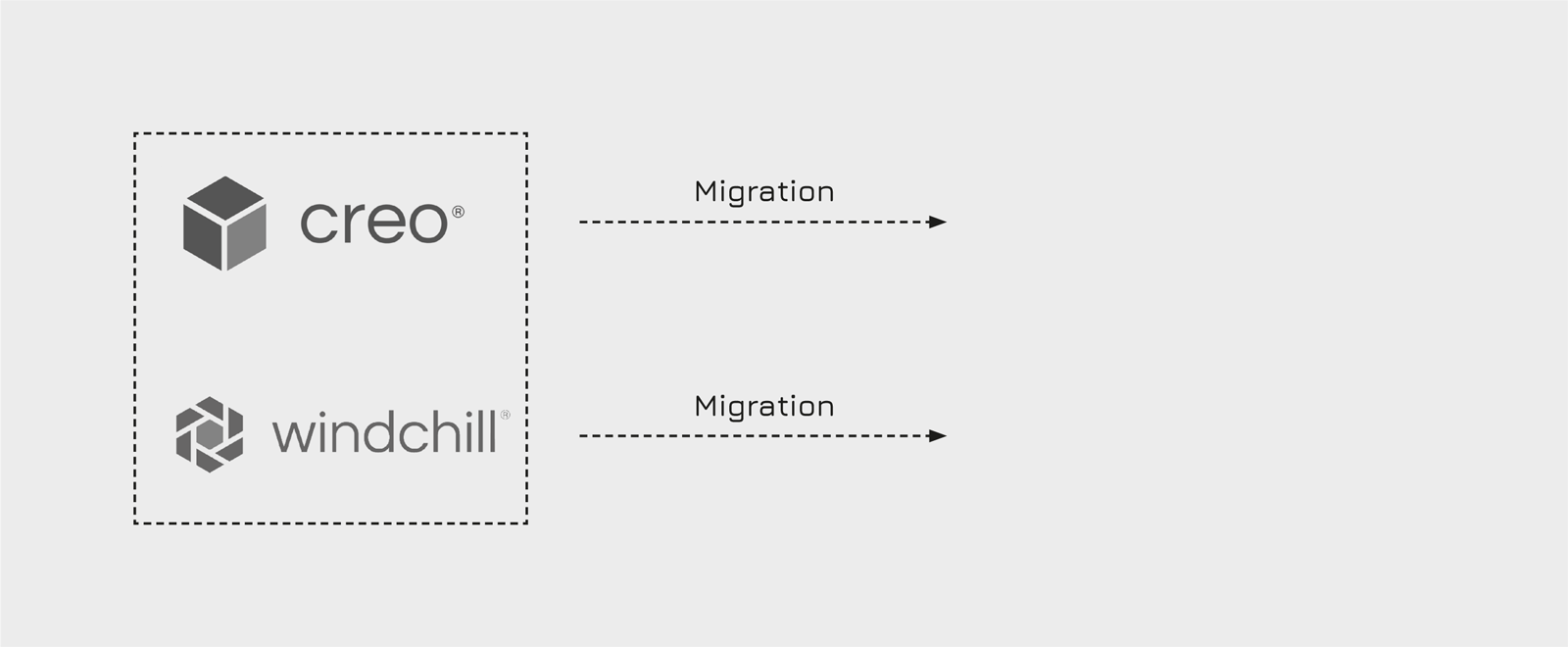
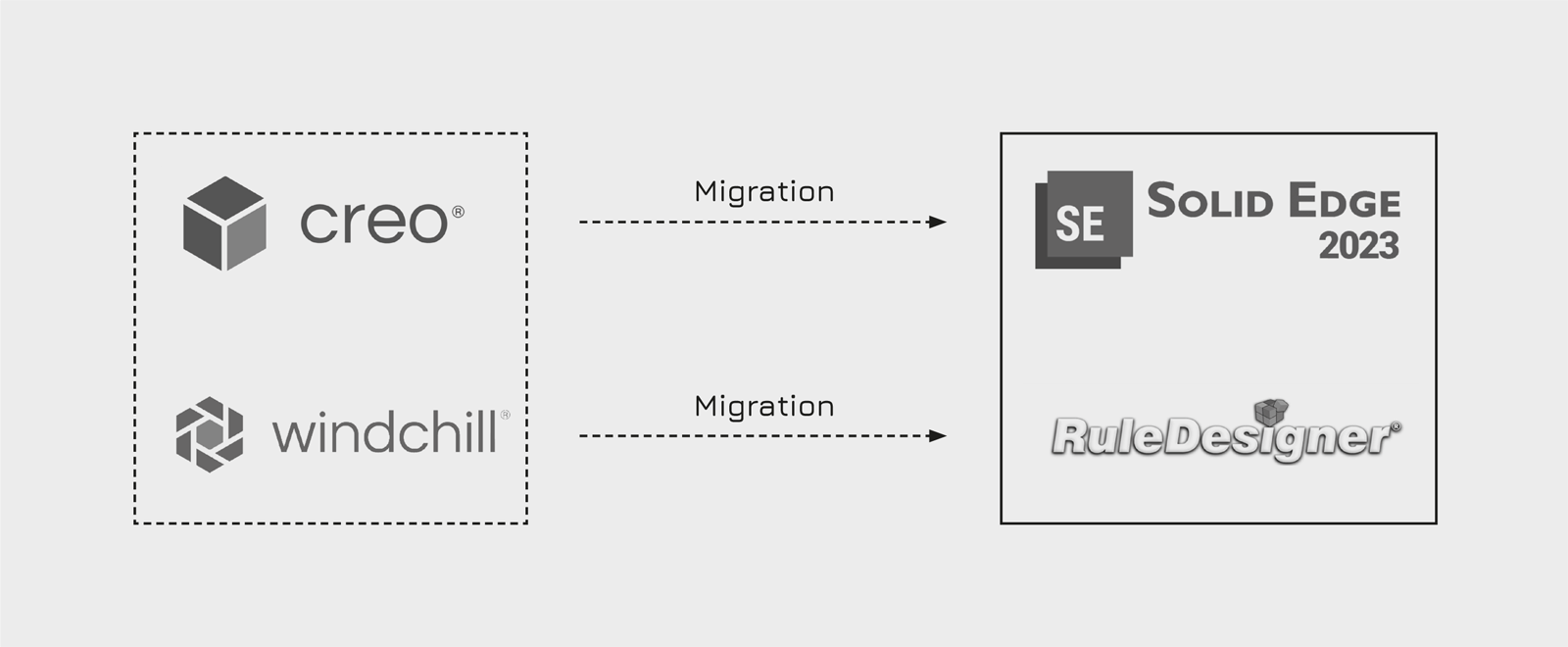
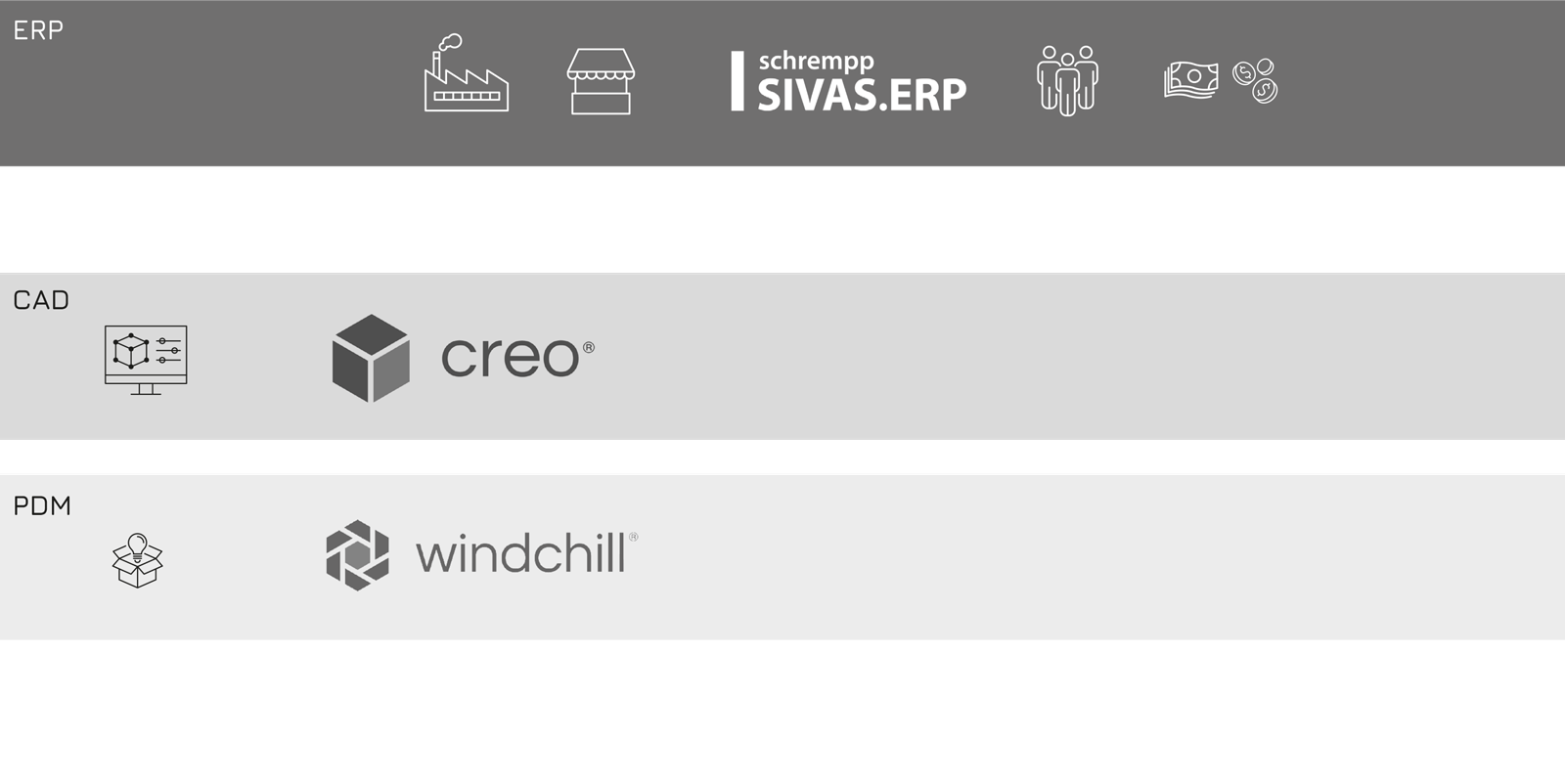
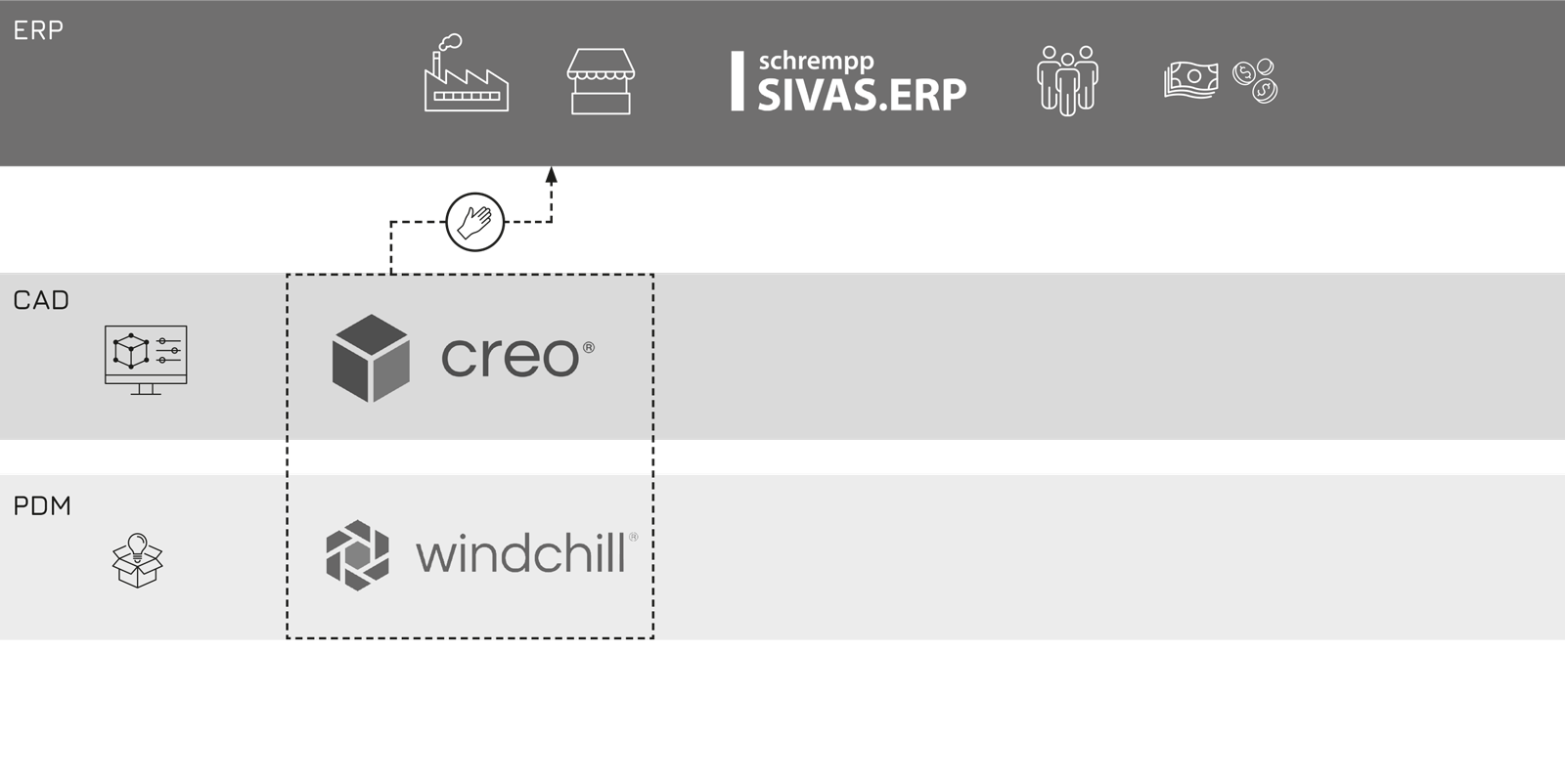
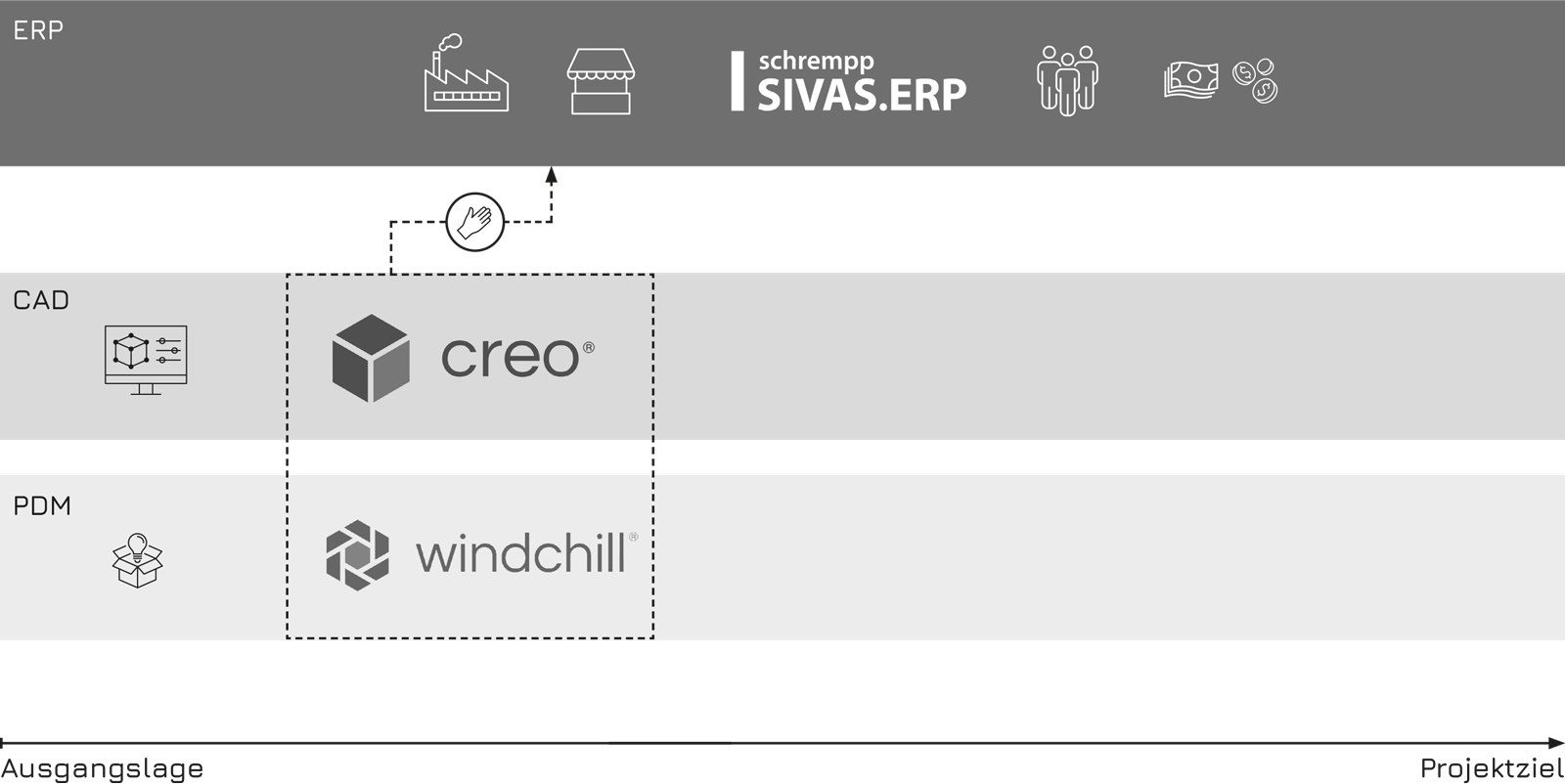
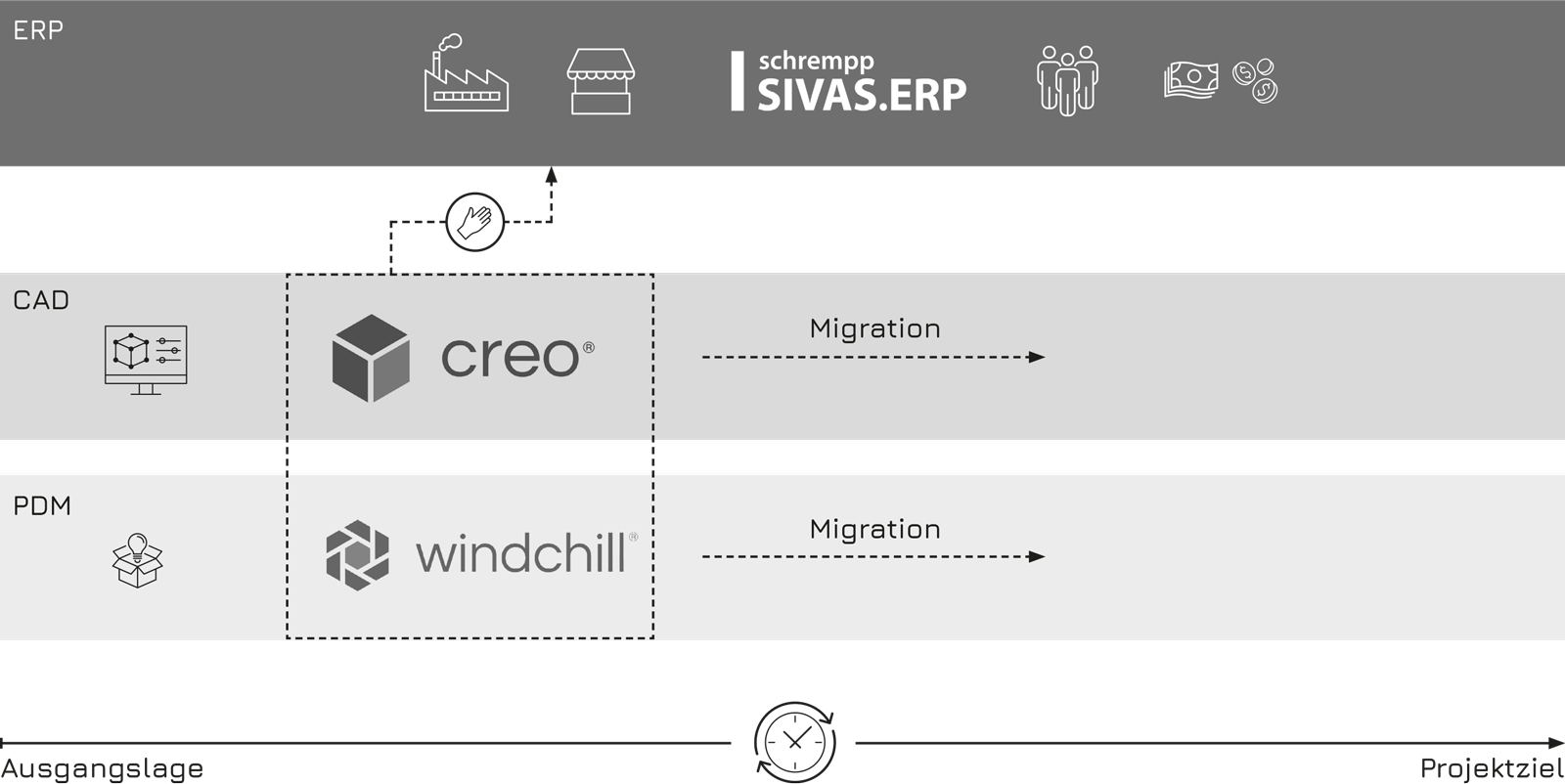
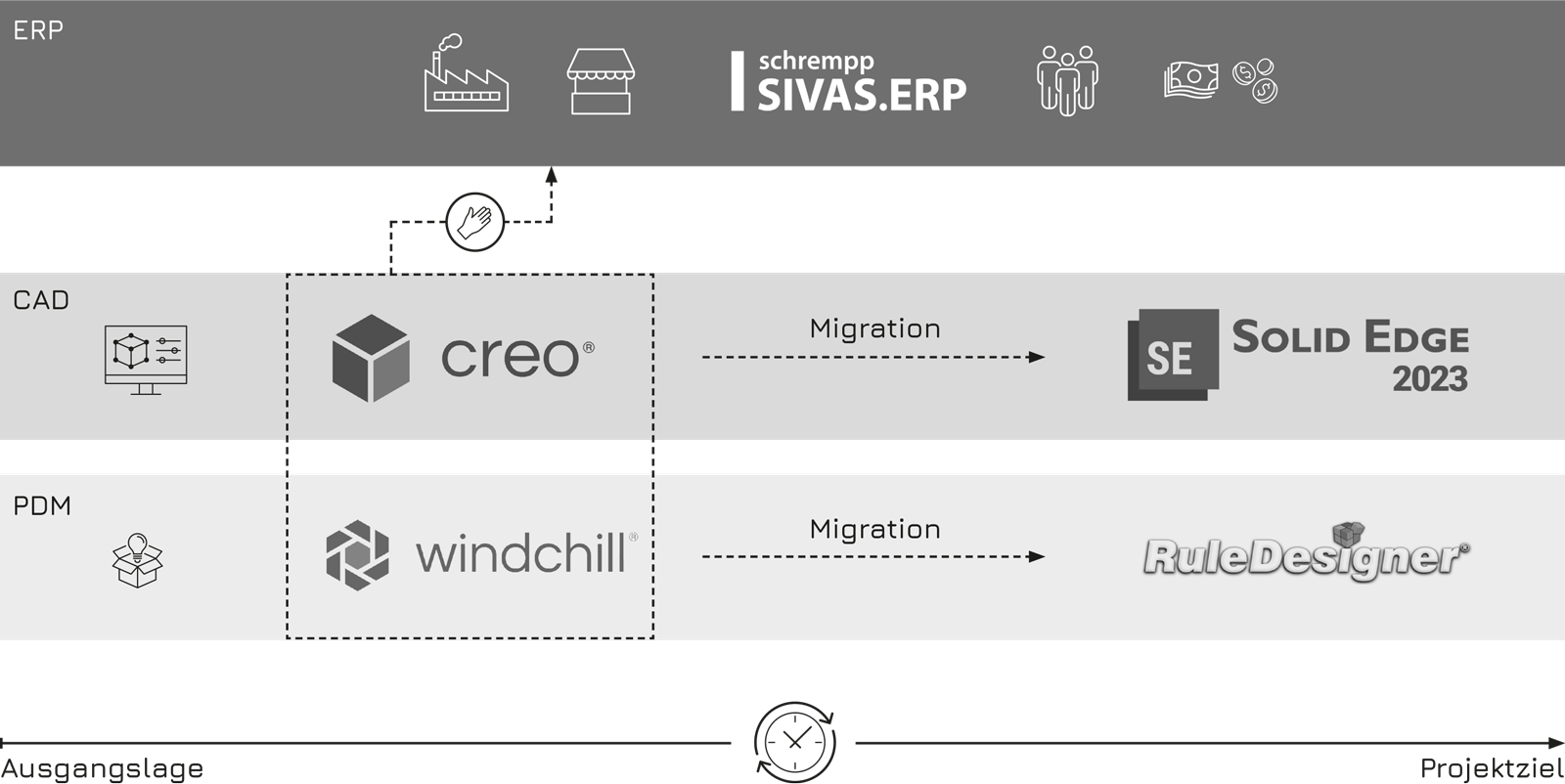
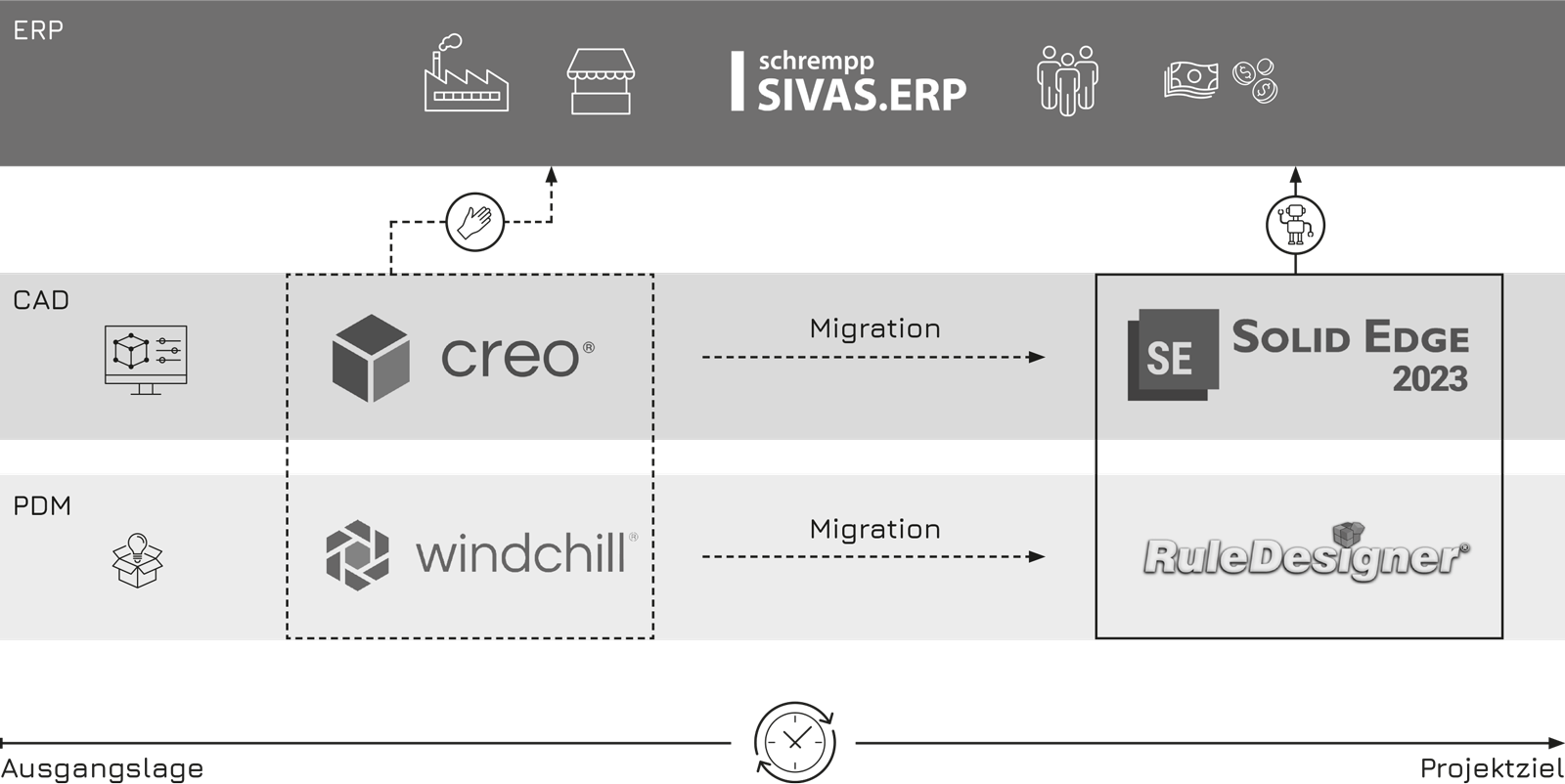
The goal was to implement SolidEdge as the new CAD system and RuleDesigner as the new PDM system. A workflow-based integration between the new PDM and the ERP was to eliminate the previously manual, error-prone steps required for information transfer. Additionally, the company aimed to benefit from the improved features of the new tools.
2/4
A concept for migrating the legacy data (approx. 30,000 files) was developed. First, the requirements for the new CAD and PDM systems were gathered to compare available solutions. Various complex assemblies were used as references, representing typical designs within the company. Potential simplifications provided by the new systems were evaluated with respect to their integration into the existing infrastructure. For example, a bidirectional connection with the ERP was ultimately ruled out due to complexity and effort.
The legacy CAD and PDM systems were replaced. Information from the design department now flows automatically into the ERP system without manual input.
3/4
Mass export from Windchill via Creo was performed using a standard script. However, the resulting geometry only contained shape data — metadata such as color, surface treatment, design history, or classification were missing. A solution was developed with the departments to enrich newly imported CAD files using existing ERP data.
Each design passes through several stages — from concept and geometry to drawing creation and final release. These require actions like prototype or series approval, four-eye drawing reviews, or data forwarding to other databases. All these processes were defined and implemented as company-specific workflows.
Throughout the lifecycle of a part, many recurring tasks arise that are now handled automatically by the PDM. For example, a PDF drawing and a STEP file are automatically derived when a part is approved for series production. Older versions are stamped with statuses like ‘obsolete’ or ‘withdrawn’. Version updates and author changes are also automated.
Legacy datasets often contain inconsistent naming conventions for components (e.g., ‘block’). Designers shouldn’t recreate parts that already exist. Clear naming schemes and categorization help find existing parts. Defining standards for fasteners and clearances also reduces part variety.
After selection, all relevant staff were trained on the new system, adapted to internal standards, and connected to existing infrastructure.
4/4
The time from design to a ready-to-order assembly was drastically reduced. Many tedious and error-prone tasks were eliminated. All recurring tasks were offloaded to automated workflows. Dropdown menus now enable standardized part naming and classification into the company’s internal technical system.

Michael Stangl
Managing Director